
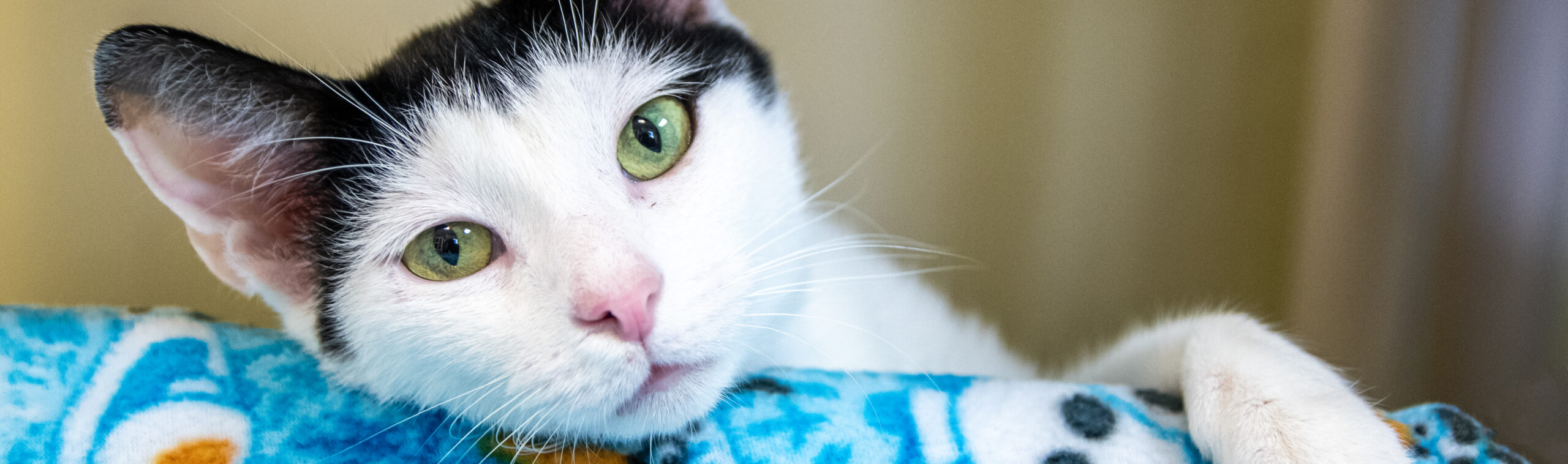





Seriously, if I could, I’d call the vet myself!!!!
Aah, springtime- the flowers are blooming, the air is crisp and young cats and dogs everywhere are finding love… which unfortunately, leads to QUITE a few unwanted animal pregnancies. We can’t blame our animals for what comes naturally to them but we must be responsible for their actions. Spaying and neutering your pets will NOT make them fat and lazy and will NOT make them meek and shy. What it will do is reduce the over population of unwanted animals in Amercia, many of whom are euthanized. Even if your pet has a litter and you find homes for all of them, each of those pets takes a potential home away from other homeless pets waiting in a shelter. In addition to this, there are also significant health benefits for your pet.
Benefits of Spaying and Neutering
Prevents pregnancy and the complications arising from pregnancy and delivery
Eliminates the heat cycle in females
Prevents unwelcome males from trying to seek out your female pet in heat
Reduces the urge to roam. This makes it less likely that you will lose your pet, which in turn makes your pet less likely to contract a disease, get in a fight, get injured, or become a victim to cruelty, poison, or traffic.
Reduces or eliminates the possibility of disease in the reproductive system.
Reduces the distracting and destructive behavior associated with the male’s efforts to get out and find a mate
Eliminates testicular tumors and reduces prostate gland problems.
In cats, neutering may stop or reduce marking behavior (territorial spraying of urine).
Reduces the urge to fight.
There are many organizations, including Pet Pal’s Veterinary Clinic, that provide low cost spay/neutering services. You owe it to your animal.
So spay and neuter-it makes them even cuter!
PUPPY LOVE ROCKED THE HOUSE!

Often times you work so hard at making an event a success that you forget to thank the people who helped get you there. Pet Pal Animal Shelter is so appreciative of their staff members and volunteers who worked tirelessly to make the 10th Annual Puppy Love Event a success. It is only through the hard work and dedication of these wonderful people that this event can take place each year and this year they turned it up a notch! We’d also like to thank our wonderful sponsors and will be paying homage to them throughout the year. Finally we would like to express our sincerest appreciation to all of you animal lovers that attended Puppy Love and opened your hearts to our cause.
Helping Your Pet To Find His Way Home
It’s just a piece of metal, really; no bigger than a quarter and costs less than a movie ticket. Yet for some reason, most people think that it’s overkill. Their pet has his county license afixed to his collar. He even has a microchip. So why in the world would there be a need for anything else? Why? Because if your animal is lost after 5pm, the County Animal Services offices are most likely closed and unless you can find a veterinary office that is working late hours, there is little chance that a microchip scanner will be available for your use. This situation happened recently to one of our volunteers. A dog was running out on a main road. She was able to coax the dog into her car and was pleased to see that the little guy had a county license but since it was 7pm in the evening she was unable to contact animal services and get the information she needed to get the dog back to his owner. Luckily, she was an animal lover and took the time to place “found” signs throughout the neighborhood. Still the owner did not see these signs until the following day. When he finally called, he was frantic to get his dog back. It was a happy reunion for both the man and his dog but think of how this all could have been avoided if the dog had a simple tag with his owner’s phone number? These tags are available at most local Pet Supply stores such at Petsmart and Pet Food Warehouse. The tag take 5 minutes to make and in most cases, cost less than $10 but their value, particularly if your animal goes missing, is priceless.
Pet Pal Hits A Home Run With The Rays!
Pet Pal Animal Shelter and the Tampa Bay Rays are partnering this 2012 Major League Baseball season. For every home run Evan Longoria hits, the Rays third baseman will join Bright House Sports Network and the Rays to each donate $100 to Pet Pal Animal Shelter, a no-kill, non-profit shelter in St. Petersburg.
Thanks to these generous community leaders, a local area business is also stepping up to the plate. HydroDog Mobile Dog Grooming, based in Tampa, FL will match the $100 donation to Pet Pal Animal Shelter for every home run Evan hits.
“I cannot express in words how grateful the Pet Pal staff and volunteers are to these amazing men and women who have come together to support our Shelter. Their generosity will help save hundreds, even thousands of animals’ lives. This is a huge win for the animals,” says Scott Daly, Executive Director of Pet Pal.
To follow this developing story, follow Pet Pal on Facebook or www.petpalanimalshelter.com
To learn more about Pet Pal Animal Shelter or to donate, contact 727-328-7738
Shelter’s Thrift Store is Open for Business!
After much hard work and dedication from our staff, volunteers and the community at large, Pet Pal Animal Shelter’s Thrift Store will hold it’s grand opening on Tuesday, April 3rd, with doors opening at 10am! Take advantage of great savings on furniture, clothing, books artwork and more. Our store is located at 1500 34th Street North in St. Petersburg, just 2.5 miles from the shelter. Proceeds from the store will provide much needed funds for our animals in need.
Adolescence is Only a Phase

It’s funny-what was adorable behavior in your puppy at six weeks, is downright annoying at 6 months. So what happened? Well, for lack of a better term, their “puppy license” expired. Puppies are given a puppy pass because well, frankly-they’re adorable. Nature is no fool- it does this for a reason. Then, sometime between 5 and 6 months, your dog begins to experience adolescence and you’re left asking, “Who is this monster and what have he done to my dog?” Suddenly, your dog won’t come when called or possibly he begins to exert his authority just a bit too much. Take a deep breath and realize that this is a normal part of your canine’s development and not a reason to surrender your pup to the nearest shelter. Our best teachers for how to deal with this actually comes from our adult dogs who understand this behavior and react accordingly. When dealing with puppies, an adult dog will tolerate an occasional gnawing of the ear or body slam but begins to set clear boundaries when this same behavior is exhibited by a slightly older, slightly larger dog. If you think about it, it’s not much different from how humans handle adolescence; a baby grabbing a fistful of hair will be tolerated more than a 12 year old doing the same act. This is mainly because they have developed the capacity to receive instruction on appropriate behavior. Because of this, clear consistent boundaries must be set and adhered to and, before you know it, that “little monster” has grown up to become your well behaved pal.
Oh Where Can He Be?
Few things are more devastating than losing your family pet. Here are some steps to take to ensure that your pet gets home safe and secure.
First, thoroughly check your property. Cats and dogs can get into places that you’d never expect! They may also remain in that spot if they are frightened, or physically unable to free themselves.
If your pet is not found on your property, the next step is to search your neighborhood. Most pets are recovered well within a 2 mile perimeter of their home. Talk with everyone you meet and leave a description of your pet as well as your number (NEVER leave your name or address and NEVER let your child go door to door unaccompanied by an adult.)
Post flyers in your neighborhood. If possible, place a photo of your pet on each flyer. Include the date and place your pet was lost, the breed, age, sex, weight, and color of the animal as well as your phone number. In addition to your neighborhood, place flyers at intersections controlled by traffic signals, grocery store entrances and exits, and at local dog parks.
Once you are home, speak to your postal worker about your missing pet, providing a description and picture if available. Your postal worker has extensive contact with people in your neighborhood and can also be canvassing the area while he is delivering mail.
While home, Place strong-scented articles outside your home to attract your pet (i.e. some of your dirty clothes, your cat’s litter box or your dog’s favorite toy.) Never leave food as that may attract stray or wild animals.
Contact, and if possible, visit animal shelters in your area.
If you live in Pinellas County, these shelters include Pinellas County Animal Services 582-2600; SPCA 586-3591; Humane Society of North Pinellas 797-7722; Friends of Strays 522-6566 and Pet Pal Animal Shelter 328-7738. Don’t forget to also call local veterinarians’ offices.
Even if your animal is not at one of these facilities, leave a description and photo. This way, they will have your contact information to give out should someone find your pet.
Place an ad in the lost and found section of your local paper. Be sure to advertise in the Sunday edition as well as during the week. Then, check the newspaper “found ads” everyday (NEVER respond to a pet ad alone! Bring a friend and meet in a public place). You can also place notices and monitor web sites such as Craig’s List, Petfinder.com, tabbytracker.com (for cats) and fidofinder.com (for dogs.)
If your animal has a microchip, contact the microchip company as soon as you realize that the animal is missing to ensure that they have the correct information on file. Most microchip companies will then send out an alert to local veterinary offices and shelters.
An innovative way to get the word out is to write a message on your car windows. As you drive around, you will be getting your message out to 100’s of people. Be careful not to block your view.
Once your animal has been located, there are steps you can take to decrease the likelihood that this will happen again.
1. If not already done, make arrangements to have your animal spayed or neutered. Altered animals are less likely to roam.
2. Get a microchip implanted and if your animal already has a chip, contact the microchip company to confirm that your animal is properly registered.
3. Make sure your pet is current on its vaccinations and has a county license.
4. ID tags with phone number(s) and other pertinent information can be purchased at local pet shops. Be sure to have a new one made yearly or whenever the information on the tag begins to fade.
5. Pet proof your yard. Check your fence for new escape routes on a regular basis and make sure that the locks are secure.
6. Take clear photographs of your animal and update them regularly.
7. Consider changing your collar to a martingale, which are specifically designed so that animals cannot slip out of them.
8. Provide your animal with exercise, toys and other distractions so that they do not get bored and feel the need to leave home.
Heartworm Prevention is Year Round
Aah…the weather is cooler and the windows are open, letting in the autumn breeze. Unfortunately, in Florida and much of the south, mosquitoes are still up to their old tricks, taking a “bite ” out of our good time. What may be an annoyance for humans, however, can prove deadly to our pets. Heartworm larva is deposited into dogs when they are bitten by an infected mosquito. Within six months the larva grow into adult heartworms causing severe damage to the animal’s heart and lungs.
Treatment for heartworms is costly and lengthy, taking up to 2 months to treat. However, Left untreated, the disease will prove deadly. Prevention by comparison is safe and inexpensive and, if administered properly, is extremely effective. Talk to your veterinarian today about heartworm treatment. Your pet with thank you.